You have successfully logged out.

2026 Best Wall Mounted Battery for Home Energy Storage?
In 2026, choosing the best wall mounted battery means looking beyond a sleek casing and a large capacity figure. The right system should fit your home’s daily electricity use, solar setup, backup needs, and available wall space. It should also be easy to monitor and supported by clear installation and warranty information. Details matter.
Energy expert Amory Lovins has expressed a useful principle: “Energy efficiency is the cheapest, cleanest, and fastest energy resource.” That idea belongs in any battery discussion. A battery stores electricity; it does not reduce a home’s demand by itself. Before comparing models, check how much power your household uses after sunset, which appliances need backup, and whether the battery can expand later. A bright touchscreen cannot answer those questions for you.
This guide looks at capacity, usable energy, power output, chemistry, inverter compatibility, safety features, and real-world installation constraints. A narrow utility room, a shaded solar array, or a high evening load can change what “best” means. Not every home needs the largest unit. And specifications do not tell the whole story. I would treat any single product ranking with caution, because local conditions and installer quality matter. The goal is a wall mounted battery that suits your home on ordinary days and performs reliably when the grid goes down.
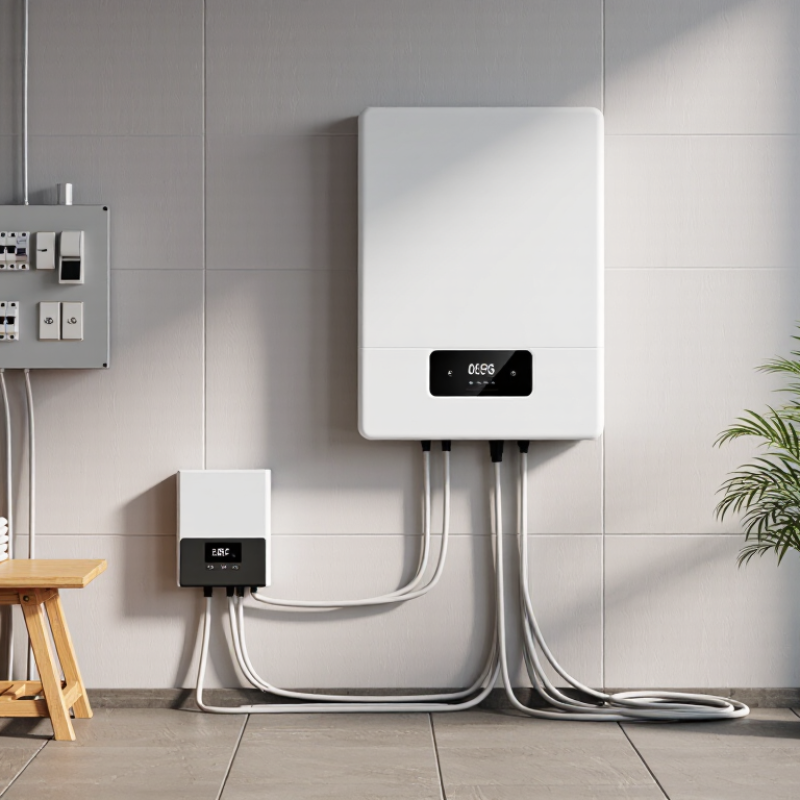
What Is a Wall-Mounted Battery for Home Energy Storage?
A wall-mounted battery is a stationary, rechargeable system fixed to a wall in a garage or utility area. It stores electricity from rooftop solar panels or, where configured, the grid. During an outage or evening peak, it can supply selected circuits through an inverter. Some systems include the inverter; others need a separate unit. It is not a generator. Its usable capacity, measured in kilowatt-hours, indicates how much energy it holds; power, measured in kilowatts, indicates how many appliances it can run at once.
For a useful benchmark, NREL’s 2024 Annual Technology Baseline models a residential battery system at 5 kW and 12.5 kWh, with 85% round-trip efficiency. That is a research assumption, not a promise about any specific home battery. Real performance depends on temperature, settings, age, and installation. A tidy wall unit may still be undersized for a heat pump or well pump. I would not size one from a monthly bill alone; list the essential loads and their running times.
Tips: Check the wall’s load capacity, clearance, and temperature range before installation. Ask a qualified installer to confirm compatible circuits and backup limits. Keep some charge in reserve if outages are a concern.