You have successfully logged out.

10 Best Heart Rate Variability Monitors for Buyers
Heart Rate Variability (HRV) describes the small changes in time between consecutive heartbeats. It is not the same as resting heart rate. Wearable monitors estimate HRV from signals collected at the wrist, finger, or chest, but their sensors and algorithms can produce different results. That matters when a morning reading appears unusually low after a poor night’s sleep or a hard training session.
Interest in these devices reflects a wider shift toward personal fitness tracking. The American College of Sports Medicine’s 2024 Worldwide Survey of Fitness Trends ranked wearable technology first for the eighth consecutive year. Still, popularity is not proof that every device is accurate or suitable for every user. HRV can vary with sleep, illness, stress, alcohol, medication, and measurement timing. Look for clear testing information, consistent recording methods, practical battery life, and an app that explains trends without overstating what they mean. Small details count.
This guide compares 10 HRV monitors for buyers, including wearability, data access, and everyday ease of use. It also considers how each product presents its readings, since a number without context can mislead. HRV is useful for observing patterns, not diagnosing a condition. No wearable replaces medical advice. The best choice is the one you can wear consistently and interpret cautiously.
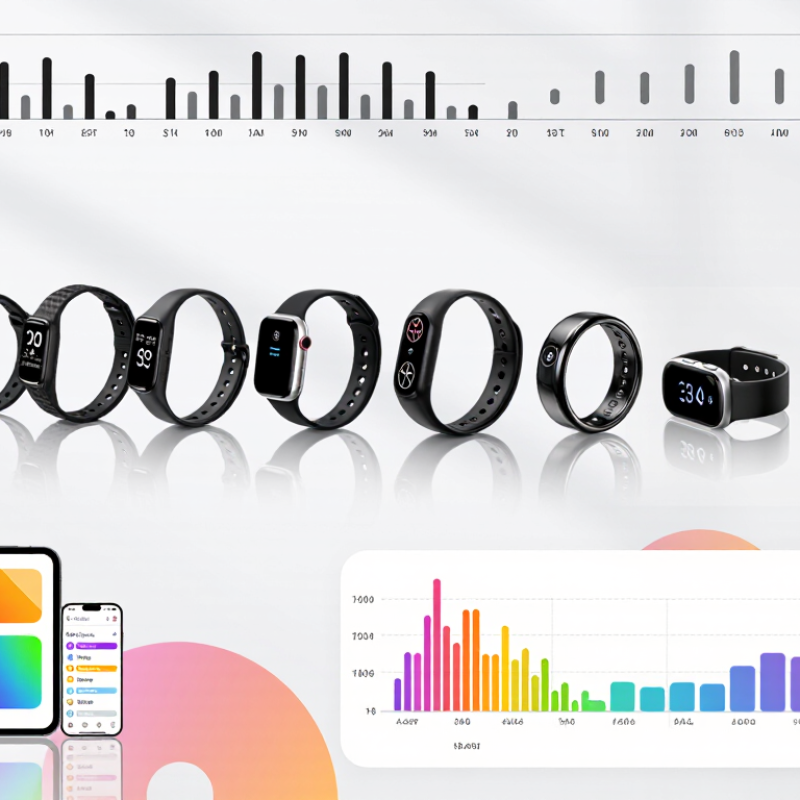
What Heart Rate Variability Monitors Measure
Heart rate variability (HRV) describes changes in the time between successive normal heartbeats. It is not the same as heart rate, which counts beats per minute. Many monitors report RMSSD, a measure of short-term beat-to-beat variation, or SDNN, which reflects variation across a recording. The 1996 standards from the European Society of Cardiology and North American Society of Pacing and Electrophysiology distinguish five-minute short-term recordings from 24-hour analyses. Recording length matters. A value from a quiet morning reading cannot be compared casually with a full-day result.
Some devices also estimate frequency-domain measures, including low- and high-frequency power. In a 2017 review, Shaffer and Ginsberg describe how recording conditions and metric choice shape HRV interpretation. They caution against treating the LF/HF ratio as a simple measure of stress or autonomic balance. Many wrist monitors use optical sensors to detect pulse timing, so movement, a loose strap, or cold hands can muddy readings. Small details matter. I still find a single score tempting, but it can hide uneven sleep, recent exercise, or a poor sensor fit. Look for repeated readings taken under similar resting conditions, not one dramatic morning number.