You have successfully logged out.

What Is the Best Type of Vape Battery for Global Buyers?

Choosing the best vape battery for global buyers requires more than comparing capacity or price. Vape Batteries must match the device, charging system, and regional safety requirements. A compact 18650 battery may suit smaller devices. A 21700 battery can offer higher capacity and longer operating time. However, compatibility always matters more than impressive numbers.

Battery chemistry deserves careful attention. Quality lithium-ion cells should include reliable protection features and clear manufacturing information. Buyers should check continuous discharge ratings, not only advertised peak figures. Peak claims can be confusing. Independent test results are more useful than colorful packaging. A practical inspection includes the wrapper, terminals, batch details, and charger connection. Small defects may signal larger quality problems.

Global sourcing adds another layer of responsibility. Suppliers should provide traceable documentation, safety data, and recognized transport testing. UN 38.3 records and relevant IEC standards can support safer international distribution. Requirements differ between markets, so buyers should confirm local rules before ordering or selling. Some regions restrict certain devices, batteries, or shipping methods. No battery is perfect. Even a well-made cell can become dangerous when damaged, overcharged, or stored in heat. A protective case is essential during transport. Buyers should also request clear warranty terms and realistic cycle-life information. This guide compares common battery types through safety, performance, availability, and compliance. It also questions popular assumptions, because the cheapest option is rarely the most dependable choice.
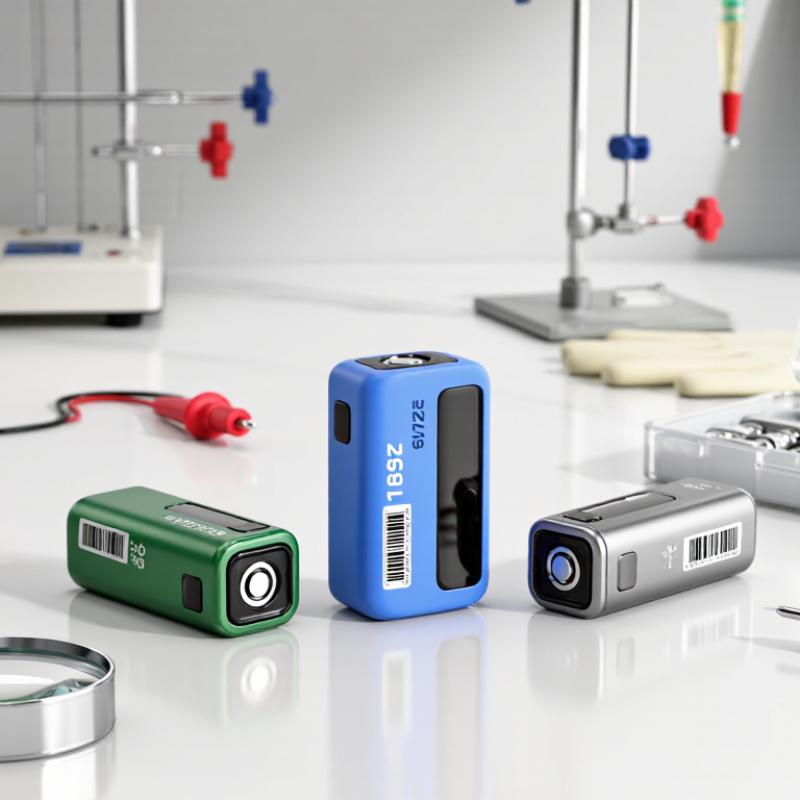
What Is the Best Type of Vape Battery for Global Buyers?

Vape Battery Types and Their Core Differences

Vape batteries differ mainly in chemistry, format, power delivery, and user control. Removable cylindrical cells, such as 18650 or 21700 formats, are replaceable and widely available. They can suit experienced users who need longer sessions or spare cells during travel. However, the device must match the correct size and electrical rating. A loose cell should never share a pocket with keys or coins.

Built-in lithium batteries offer a simpler experience. The cell stays inside the device, and charging usually happens through an integrated port. This design reduces handling mistakes and feels convenient for new users. Its weakness is practical: battery aging may eventually require professional service or device replacement. Lithium-polymer pouch cells can also support slim designs, but their flat shape needs careful internal protection. They are less convenient to replace.

Power ratings deserve careful attention. A higher number does not automatically mean better performance.

Look for the continuous discharge rating, not an impressive pulse figure. Check charging protection, temperature control, casing quality, and clear test documentation. I once assumed the largest capacity was the smartest choice; that was too simple. Capacity, output stability, heat management, and local availability must be considered together. Global buyers should also verify transport documentation, regional electrical requirements, recycling options, and applicable consumer-safety rules before ordering. Terms such as UN 38.3 and IEC 62133 may appear in reliable battery documentation, but paperwork alone cannot replace careful handling.

Key Performance Factors for Global Buyers

The best vape battery for global buyers is not defined by capacity alone. Key performance factors include stable voltage, safe discharge, charging control, and reliable temperature behavior. A 3,000 mAh cell may last longer, but it can perform poorly under repeated high-load use. Discharge rating matters more than impressive numbers on a label. IEA’s Global EV Outlook 2024 reported that global lithium-ion battery demand exceeded 750 GWh in 2023. This scale has improved supply, but quality still varies between cells and factories.

Look for documented testing against IEC 62133-2 and UN 38.3 transport requirements. These standards do not guarantee perfect performance. They provide a stronger verification starting point. Protection against overcharge, short circuits, and excessive heat is essential. Battery life also depends on charging current, storage temperature, and daily cycling.

In practice, a moderate-capacity battery with a dependable protection circuit may outperform a larger, cheaper option. That assumption is easy to miss.

Tips: Request test summaries, safety data sheets, production dates, and clear capacity measurements. Confirm whether ratings describe continuous or pulse discharge. Avoid products with vague “high-power” claims. Store batteries away from metal objects and extreme heat. Do not mix cells with different ages or capacities. IATA’s lithium battery guidance also shows why transport documentation matters for international shipments. One weakness remains: published test data may reflect laboratory conditions, not humid ports, cold warehouses, or real user habits. Global buyers should allow a performance margin.

Safety Standards, Certifications, and Regulatory Requirements

For global buyers, a vape battery should be judged by safety evidence, not capacity alone. Rechargeable lithium-ion cells require controlled charging, over-discharge protection, and short-circuit safeguards. Built-in protection is valuable. It is not flawless.

Look for test reports referencing IEC 62133-2, UN 38.3 transport testing, and relevant regional electrical standards. These documents should identify the exact cell, pack design, laboratory, and test date. A generic certificate proves little. Check whether the report matches the delivered battery, including its connector and protective circuit. Some suppliers provide attractive paperwork with incomplete technical details. That deserves careful questioning.

Regulatory requirements differ across markets. Buyers may need product registration, chemical disclosures, warning labels, child-resistant packaging, or import documentation. Battery capacity, charging ports, and removable designs can also affect compliance. Confirm requirements with the destination authority before placing an order. Keep records of declarations, inspection results, and batch numbers. A small label error can delay a shipment.

Use only the supplied charger or a charger approved for the battery’s specifications. Inspect the casing for swelling, cracks, heat marks, or unusual odor. Stop using damaged cells. Do not charge them overnight or on soft surfaces. Safety advice can feel overly cautious, yet real-world handling is often less careful than written procedures. That gap needs honest attention.

What Is the Best Type of Vape Battery for Global Buyers?

Safety Standards, Certifications, and Regulatory Requirements

How to Read the Chart

For passenger air transport, lithium-ion batteries up to 100 Wh are generally permitted in carry-on baggage. Batteries above 100 Wh and up to 160 Wh usually require airline approval. Batteries above 160 Wh are not permitted as passenger baggage and normally require cargo transport under applicable dangerous-goods rules. Airline and national requirements may be stricter.

UN 38.3

Transport testing is required for lithium cells and batteries shipped internationally, including vibration, shock, short-circuit, overcharge, and forced-discharge tests.

IEC 62133-2

A key safety standard for portable sealed secondary lithium cells and batteries, covering electrical, mechanical, and environmental safety.

Best Global Design Choice

A protected rechargeable lithium-ion battery system with documented test reports, reliable over-charge and short-circuit protection, clear watt-hour labeling, and compliant packaging is generally the most practical option for global buyers.

Reference basis: international air-transport lithium battery thresholds commonly reflected in ICAO Technical Instructions and IATA Dangerous Goods Regulations. Market-specific product markings and conformity requirements vary by destination.

Choosing Battery Specifications for Different Vape Devices

What Is the Best Type of Vape Battery for Global Buyers?

Choosing a vape battery starts with the device, not the highest capacity number. Small pod devices usually need compact internal batteries with modest output and stable charging protection. A battery around 500–1,000 mAh may support light daily use without adding unnecessary weight. Check the device manual carefully. Some models require a built-in battery and do not accept removable cells.

For larger regulated devices, buyers should compare voltage range, continuous discharge rating, capacity, and cell size. Common removable formats include 18650 and 21700 cells, but compatibility must be confirmed before purchase. A higher mAh rating can mean longer use, yet it may provide less continuous power. That trade-off matters when a device operates at higher wattage. Use matched, quality-tested cells, an approved charger, and undamaged insulation.

Safety comes before runtime. Look for overcharge, over-discharge, short-circuit, and temperature protection. I have found that battery labels can be confusing, especially when capacity and peak output are presented together. Peak figures are not the same as continuous performance. This needs checking. Global buyers should also verify charger voltage, plug requirements, shipping rules, and local electrical standards. Batteries should be stored in a protective case, away from metal objects and heat. My earlier assumption was that bigger capacity always improved usability; real-world weight, charging time, and device balance often proved otherwise.

Comparing Suppliers, Costs, and International Shipping Conditions

What Is the Best Type of Vape Battery for Global Buyers?

For global purchasing, protected lithium-ion batteries are usually the practical choice. Standard 18650 cells offer broad availability and lower unit costs. Larger 21700 cells often provide higher capacity and longer operating time. However, bigger capacity does not automatically mean better value. It can also increase shipping restrictions, testing costs, and replacement risk.

Supplier quality matters more than a small price difference. Ask for recent UN 38.3 test summaries, IEC 62133-2 evidence, safety data sheets, and batch-level inspection records. A reliable supplier should state cell origin, nominal capacity, cycle performance, and protection settings clearly. BloombergNEF reported an average lithium-ion battery pack price of 139 dollars per kWh in 2023, down 14 percent year over year. That figure is not a direct vape-cell price, but it shows why market quotations can change quickly.

International shipping may decide the final cost. Under current IATA Dangerous Goods guidance, standalone lithium-ion batteries generally require cargo-aircraft handling, proper labels, documentation, and controlled state of charge. Sea freight can reduce cost, but transit may take several weeks. Packaging quality is critical. Loose cells need insulation, separation, and strong outer cartons. Some suppliers quote cheap batteries first, then add testing and freight charges later. I have seen this mistake in purchasing reviews. The cheapest offer is often incomplete. Checking destination rules with the carrier remains necessary, because requirements differ by route and product configuration.

What Is the Best Type of Vape Battery for Global Buyers? - Comparing Suppliers, Costs, and International Shipping Conditions

Battery Type Typical Format Nominal Voltage Typical Capacity Typical Continuous Discharge Range Indicative Bulk Unit Cost Recommended Product Use Supplier Requirements International Shipping Conditions Global Buyer Assessment
Protected 18650 Lithium-Ion Cell Removable cylindrical cell; approximately 18 × 65 mm 3.6–3.7 V nominal; 4.2 V when fully charged 2,000–3,500 mAh 10–20 A, depending on cell design and temperature Approximately US$2.00–US$5.00 per cell in larger quantities Compact regulated devices and replaceable-battery vaporizers Request capacity, discharge rating, cycle-life data, insulation quality, protection-circuit details, and UN 38.3 test documentation. Usually treated as a lithium-ion battery under dangerous-goods rules. Air shipments may require approved packaging, a state-of-charge limit, battery marks, and a shipper declaration depending on configuration and transport route. Good balance of availability, size, cost, and established supply-chain support.
Protected 21700 Lithium-Ion Cell Removable cylindrical cell; approximately 21 × 70 mm 3.6–3.7 V nominal; 4.2 V when fully charged 4,000–5,000 mAh 15–30 A, depending on the cell model and operating conditions Approximately US$3.00–US$7.00 per cell in larger quantities High-capacity devices that can accommodate a larger battery compartment Confirm actual measured capacity rather than marketing capacity, maximum continuous current, thermal performance, protection design, and compatibility with the device. Subject to the same general lithium-ion transport controls as other rechargeable cells. Larger battery capacity can increase package energy and may affect air-carrier acceptance and documentation. Often the strongest choice for runtime and current capability when the device is designed for this larger format.
Lithium-Ion Polymer Pouch Battery Custom flat pouch with welded tabs or lead wires 3.7 V nominal; 4.2 V when fully charged 500–3,000 mAh for many compact devices Approximately 5–30 A, depending on construction and specifications Approximately US$1.50–US$6.00 per battery, excluding tooling and custom assembly Slim pod systems, compact rechargeable devices, and custom-shaped products Require cell drawings, dimensions, connector or wire specifications, swelling controls, short-circuit protection, incoming inspection, and sample testing. Normally shipped as lithium-ion batteries. Pouches need strong protection against crushing, puncture, terminal contact, and accidental activation. Custom battery packs may require additional transport and product documentation. Best for space-efficient designs, but more sensitive to mechanical damage and manufacturing-quality variation.
Built-In Rechargeable Lithium-Ion Battery Pack Battery permanently installed inside the device 3.7 V nominal for a single-cell design; higher for multi-cell packs 400–3,000 mAh for many consumer devices Defined by the integrated battery-management system and device electronics Approximately US$2.00–US$10.00 per finished device battery assembly Closed or semi-closed rechargeable devices where user replacement is not required Verify charging protection, over-current protection, over-discharge protection, thermal protection, USB charging safety, cycle life, and enclosure integrity. Often classified as lithium-ion batteries contained in equipment. This can simplify handling compared with loose cells, but transport rules, package limits, labeling, and carrier restrictions still apply. Convenient and tamper-resistant, with fewer loose-cell handling issues; replacement and end-of-life servicing are less flexible.
Primary Lithium Battery Non-rechargeable cylindrical or pouch cell Commonly 3.0 V or 3.6 V nominal, depending on chemistry Varies by chemistry and format Usually lower suitability for repeated high-current use Approximately US$1.00–US$5.00 per cell in bulk Generally unsuitable for rechargeable vaping products Supplier must clearly identify the chemistry and confirm that the battery is not being marketed for rechargeable use. May be regulated as a lithium-metal or other dangerous-goods battery. Air transport restrictions can be more stringent than for rechargeable lithium-ion cells. Generally not recommended for rechargeable vape products because charging can create a serious safety hazard.
Buyer guidance: Indicative prices are broad bulk-market ranges in U.S. dollars and can change with capacity, order quantity, testing, packaging, certification, customization, and destination. Before purchase, request current safety data, UN 38.3 test evidence, IEC 62133-2 test evidence where applicable, battery specifications, protection-circuit details, and transport classification. Shipping acceptance depends on the carrier, origin, destination, battery configuration, package energy, and applicable national regulations. Do not rely on nominal capacity or advertised discharge ratings without independent sample testing.