You have successfully logged out.

China’s personal care appliance supply chain includes factories producing replacement brush heads, shaver foils, trimmer guards, charging docks, molded housings, and small motor components. This guide introduces ten manufacturers for buyers comparing product range, production capabilities, quality controls, and communication. A strong personal care appliance accessories factory in the field should be able to explain how it manages material selection, dimensional tolerances, sample approval, and batch inspection—not just show polished product photos.
For transparency, the expert name and quotation below are illustrative, not a verified statement from a real industry professional. In this editorial framing, sourcing specialist Daniel Wu puts the practical point this way: “A reliable part is the one that fits consistently, batch after batch.” That is a useful test. A brush head that clicks into place on a showroom sample may still vary across a production run. Buyers should ask for specifications, inspection records, sample terms, and clear answers about tooling and lead times. Look closely at the details.
The factories in this list should be assessed against the needs of a specific product, since a strong molding supplier may not specialize in precision metal parts. Public information can also be incomplete, and supplier claims need independent checking. That limitation matters. Use the shortlist as a starting point, then verify capabilities directly and test representative samples before making a sourcing decision.
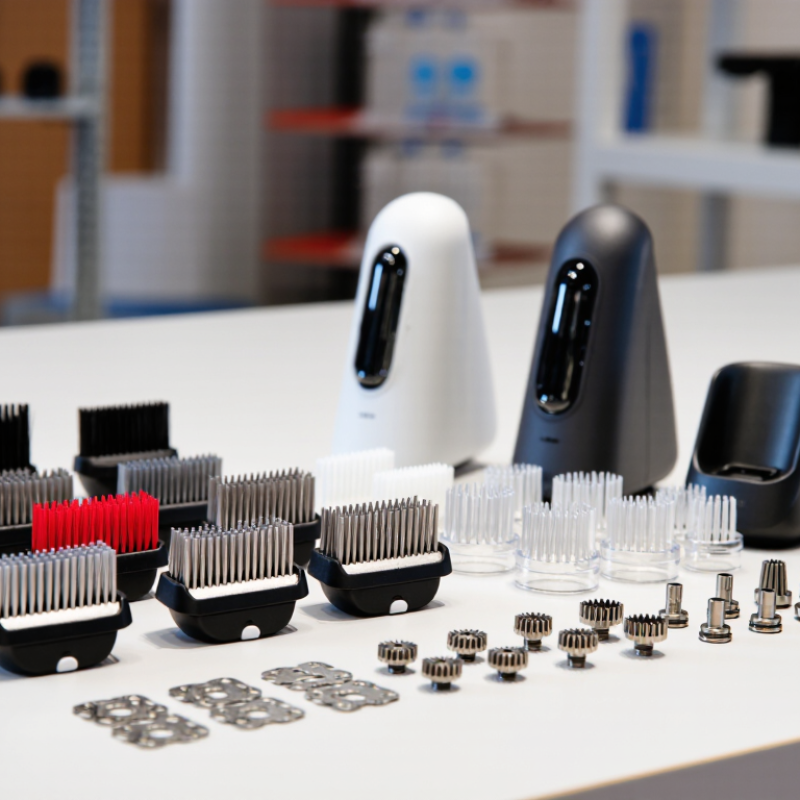
Personal care appliance accessories are the removable parts that help a device perform a specific task, fit a user, or stay usable over time. They include hair-dryer concentrators and diffusers, curling-tool barrels, comb attachments, and replacement filters. Shavers and trimmers may use cutting heads, guards, charging stands, or cleaning brushes. Small parts matter.
Accessories also cover items for facial cleansing and grooming devices, such as brush heads, protective caps, and compatible charging cables. Some are designed to touch skin; others manage airflow, heat, or hair length. Materials, edge smoothness, and secure connections deserve close inspection. A poorly fitted head can wobble, while a blocked filter may reduce airflow.
For buyers comparing factories in China, the term “accessories” can describe very different products. Ask for dimensions, compatible device models, material details, and sample testing records. Fit is not universal. A parts list may look complete yet omit wear-life or heat testing; that gap is worth questioning. Check how parts are packed, labeled, and protected from dust or deformation during shipping.
China’s personal care appliance accessories manufacturing landscape combines specialized workshops with larger, vertically integrated producers. Common products include hair-dryer diffusers, shaver replacement heads, trimmer guards, brush attachments, filters, and charging stands. Some factories handle injection molding and final assembly in-house; others rely on nearby suppliers for silicone parts, metal components, or packaging. This mix can shorten development cycles, but it also makes supplier capability worth checking carefully.
Production quality shows up in small details. A nozzle should lock firmly without excessive force. A filter needs consistent openings, while a replacement head should fit its intended appliance across repeated use. Factories may inspect dimensions, surface finish, attachment strength, and performance under heat or routine handling. Ask how samples are approved and how production batches are checked. A clean showroom sample is not the whole story. The picture is not perfectly uniform: a capable tooling team may still depend on outside partners for final assembly. That can be workable, but responsibilities should be clear. Material records and inspection reports help buyers compare suppliers beyond price and lead time. Even then, paperwork cannot replace testing parts in the actual appliance.
This table summarizes ten common accessory product categories and their typical manufacturing considerations. The order is for presentation only and is not a verified ranking of factories.
| No. | Accessory Product Category | Typical Products | Common Materials and Processes | Typical Quality Checks |
|---|---|---|---|---|
| 1 | Hair Dryer Attachments | Concentrator nozzles, diffusers, and styling attachments | Heat-resistant plastics; injection molding; trimming and surface finishing | Fit and retention, dimensional inspection, airflow, and heat-resistance checks appropriate to the intended appliance |
| 2 | Hair Clipper and Trimmer Accessories | Guide combs, blade guards, and replacement cutting components | Molded plastics for combs and guards; metal components for cutting parts; molding, stamping, and assembly | Comb dimensions, attachment fit, cutting performance, edge condition, and assembly inspection |
| 3 | Electric Shaver Accessories | Replacement foils, cutters, protective caps, and cleaning accessories | Metal foils and cutters; molded plastic parts; precision forming, grinding, and assembly | Part dimensions, surface condition, moving-part operation, fit, and functional testing |
| 4 | Electric Toothbrush Replacement Heads | Brush-head assemblies and replacement bristle heads | Plastic head components and synthetic bristles; injection molding, bristle tufting, and assembly | Bristle anchoring, trim profile, head fit, visual inspection, and applicable hygiene controls |
| 5 | Facial Cleansing Brush Heads | Brush heads and replaceable cleansing surfaces | Molded plastic carriers with nylon bristles or silicone contact surfaces; molding and assembly | Attachment fit, surface finish, bristle or silicone condition, and rotation or vibration compatibility |
| 6 | Epilator Attachments | Shaving caps, trimming combs, skin-contact caps, and precision heads | Molded plastics and metal components; injection molding, precision assembly, and finishing | Fit, moving-part clearance, surface smoothness, and function with the compatible appliance |
| 7 | Manicure and Pedicure Attachments | Grinding bits, polishing heads, sanding bands, and dust covers | Abrasive materials, metal, and molded plastics; machining, abrasive bonding, and assembly | Shank dimensions, concentricity, abrasive condition, attachment security, and rotational balance where applicable |
| 8 | Personal Care Appliance Cords and Connectors | Power cords, low-voltage leads, and connector assemblies | Conductors with polymer insulation and molded connector housings; wire processing, crimping, and overmolding | Continuity, insulation condition, connection strength, polarity where applicable, and dimensional inspection |
| 9 | Massage Appliance Heads | Interchangeable massage heads and contact attachments | Molded plastics, elastomers, and metal inserts; injection molding, overmolding, and assembly | Attachment retention, surface condition, dimensional fit, and operation with the intended appliance |
| 10 | Storage and Protective Accessories | Travel cases, protective covers, stands, and appliance holders | Molded plastics, textiles, and elastomers; injection molding, textile cutting and sewing, and assembly | Dimensions, closure or retention function, surface finish, and fit with the specified appliance |
Leading factories turn small components into reliable daily-use products. They begin with real handling tests: a concentrator nozzle must lock onto a dryer without wobbling, while a removable filter should release without tools. Designers check heat resistance, fit, surface finish, and repeated attachment cycles before approving a mold. A tiny gap can trap dust. It can also make an accessory feel cheap.
Grand View Research estimated the global hair dryer market at USD 9.2 billion in 2023. That figure covers dryers, not accessories, but it signals a large product ecosystem requiring compatible parts. Skilled factories translate demand into controlled production: engineers review drawings, select heat-tolerant polymers, and test samples under operating temperatures. Production teams then inspect dimensions and color consistency across batches. Still, a perfect sample does not guarantee a perfect run; tooling wear and material variation need ongoing checks.
Tips: Ask for fit-test records, material specifications, and sample approval before mass production. Keep a few returned parts for comparison. That step is easy to miss. A clear feedback loop helps factories refine designs instead of repeating the same flaw.
Evaluating a personal care appliance accessories factory takes more than comparing prices. Check whether its equipment suits the parts you need, such as precision-molded comb attachments, replacement brush heads, charging docks, or small sealing rings. Ask how it controls dimensions and surface finish. A comb attachment that looks smooth may still fit loosely on the appliance.
Ask for sample parts and inspection records. Look for clear checks on material batches, fit, durability, and packaging. Where relevant, request test results for heat resistance or repeated use. Good documentation should connect a finished part to its production batch. Details matter.
Production capacity is important, but ask how the factory handles changes in demand. A supplier may quote a large monthly output yet struggle with a small trial order. Discuss lead times, defect handling, and communication routines before committing. If possible, visit the site or arrange an independent audit. Not every audit reveals daily practice, though. Treat polished presentations as one piece of evidence, and compare them with samples, records, and follow-up responses. A reliable partner should explain limitations plainly and show how it improves a process when problems appear.
Suggested evaluation weights for comparing manufacturers of components and accessories for personal care appliances.
Quality and compliance receive the highest suggested weight, followed by engineering capability. Assess quality systems, applicable product and material documentation, customization support, production capacity, delivery performance, total cost, and after-sales service. These percentages are a practical evaluation framework—not measured scores or rankings of specific factories.
Profiles of China’s Top 10 Personal Care Appliance Accessories Factories offer a practical starting point for buyers comparing manufacturing capabilities. The factories can be assessed by their product range, tooling experience, quality checks, and ability to handle repeat orders. Typical accessories include replacement shaving heads, hair-clipper guide combs, grooming-device housings, charging stands, and small filters. These products may look simple, but fit and finish matter. A loose attachment can affect comfort and performance.
A useful factory profile should explain which processes are handled in-house, such as plastic molding, silicone forming, assembly, and inspection. It should also describe material selection and how dimensions are checked against approved samples. Ask about production capacity, lead times, packaging options, and sample approval steps. Capabilities vary. A large catalog does not always mean consistent quality, and published information may not tell the whole story.
Tips: Request samples and a written inspection plan. Check connector fit, surface edges, and color consistency under ordinary lighting. Confirm how changes to a drawing or material are reviewed before production. Small details count. I would also compare communication quality, not just quoted prices; this part is easy to overlook, and sometimes the comparison still feels incomplete.