You have successfully logged out.

How to Choose a Silicone Hose Manufacturer?
Choosing a silicone hose manufacturer is not just a price comparison. The right partner should understand your operating conditions, material requirements, and production risks. W. Edwards Deming, a manufacturing quality expert, said, “Quality comes not from inspection, but from improvement of the production process.” That principle matters here: consistent hoses depend on controlled materials, tooling, curing, and testing—not just a final visual check.
Start with the application. Record the working temperature, pressure, fluid exposure, bend radius, and connection dimensions. Then ask how the manufacturer verifies each requirement. Request material specifications, pressure-test results, batch traceability, and samples for fit checks. A hose that looks smooth on a bench may still kink near a tight clamp. Small details matter.
Experience should show in the questions the supplier asks you. A capable silicone hose manufacturer will clarify the operating environment before recommending a construction or reinforcement. Ask about production capacity, inspection methods, and how defects are handled. Compare evidence, not broad claims such as “premium quality.” If documents are vague, pause and ask for specifics. I would not treat a polished sample as proof of long-term consistency; that is an easy mistake to make. The sections ahead outline practical checks for comparing suppliers, evaluating technical support, and choosing a manufacturer that can meet your requirements over time.
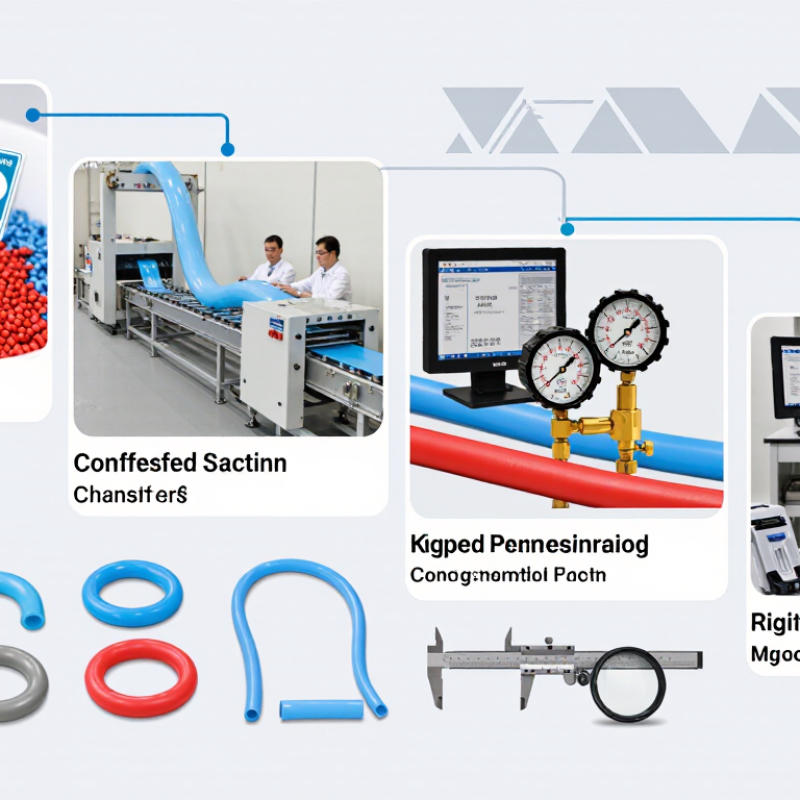
Define Your Silicone Hose Application and Performance Requirements
Before comparing manufacturers, define the job the hose must perform. Note the fluid or air it will carry, the normal operating temperature, and the highest temperature it may briefly reach. Include working pressure, pressure spikes, and any vacuum exposure. A rating that looks adequate on paper may not cover a cold start or a sudden surge. Small details matter.
Describe the installation, too. Record the hose’s inside and outside diameters, connection type, length, bend radius, and available clearance. Will it stay still, or flex with engine vibration? Is it exposed to sunlight, ozone, cleaning agents, or abrasion? These conditions help a manufacturer recommend a suitable silicone construction. Check compatibility with the exact fluid; silicone is not automatically appropriate for every oil or fuel. Ask for written performance data, and compare it with your actual operating range. A simple sketch or clear photos can prevent sizing errors. I have seen specifications become vague when teams assume “high temperature” means the same thing to everyone. It doesn’t. If possible, request a sample for fit and function checks before approving a production run. A little extra checking can save a frustrating redesign.
How to Choose a Silicone Hose Manufacturer? — Define Your Silicone Hose Application and Performance Requirements
| Requirement | What to Define | Example Specification or Application Detail | Why It Matters When Selecting a Manufacturer |
|---|---|---|---|
| Application and conveyed media | Describe the equipment, operating cycle, and material that will pass through the hose. | Coolant transfer in an engine compartment; air conveyance in industrial equipment; food-contact liquid transfer. | Silicone compounds and hose constructions are not universally compatible with every fluid. Ask the manufacturer to assess the actual media, concentration, and exposure conditions. |
| Operating temperature | Provide normal, continuous, and short-duration minimum and maximum temperatures. | For example: continuous operation from −40°C to 180°C, with brief excursions to 200°C, if supported by the application design. | Temperature capability depends on the specific compound, reinforcement, pressure, and duration. Confirm the manufacturer’s limits for the complete hose assembly, not just the raw silicone material. |
| Working pressure | State normal operating pressure, pressure peaks, and whether the system experiences pulsation. | Specify the required working pressure in kPa, bar, or psi and identify recurring pressure surges. | Pressure rating varies with hose diameter, wall thickness, reinforcement, temperature, and bend geometry. Request ratings for the proposed size and operating conditions. |
| Vacuum resistance | Indicate whether the hose is exposed to suction or negative pressure and for how long. | Continuous partial vacuum in an intake line, or intermittent vacuum during a process cycle. | A hose suitable for positive pressure may not resist collapse under vacuum. Specify the vacuum level, temperature, hose length, and installation support. |
| Dimensions and tolerances | Define inside diameter, outside diameter or wall thickness, length, and dimensional tolerances. | Inside diameter: 25 mm; cut length: 300 mm; provide acceptable tolerances and identify connection dimensions. | Accurate dimensions support fit, sealing, flow, and consistent production. Share drawings or samples for complex profiles and confirm how dimensions are measured. |
| Construction and reinforcement | Identify the required number and type of reinforcement layers, or specify the performance the construction must achieve. | Reinforced straight hose for pressure service; formed or multi-ply construction where the application requires additional strength. | Reinforcement affects pressure capacity, flexibility, dimensional stability, and bend behavior. The manufacturer should recommend a construction based on the complete duty cycle. |
| Bend radius and routing | Provide the minimum bend radius, hose path, and any risk of kinking, twisting, or contact with nearby components. | Installation requires a 90-degree route within a defined space; confirm the allowable bend radius at operating temperature. | Small or repeated bends can reduce flow or damage the hose. A drawing or installation mock-up can help the manufacturer assess fit and propose a suitable shape. |
| Environmental exposure | List exposure to weather, UV, ozone, oils, cleaning agents, abrasion, vibration, and nearby heat sources. | Outdoor service with UV exposure and intermittent contact with a specified cleaning solution. | Environmental conditions can affect service life and material compatibility. Request confirmation for the actual exposure rather than relying on a general material description. |
| Regulatory and cleanliness needs | Identify any required regulatory framework, product-contact rules, emissions limits, or cleanliness expectations. | For food-contact use, specify the applicable jurisdiction and intended food type; for medical or laboratory use, state the relevant application requirements. | Requirements depend on the end use and market. Ask for current, applicable documentation and clarify whether it covers the compound, finished hose, and any processing aids. |
| Connections and end finishing | Describe fitting type, clamp or coupling arrangement, end shape, and assembly method. | Straight cut ends for clamp connections, or molded ends matched to defined mating components. | Connection design affects sealing and installation reliability. Confirm tolerances, retention method, and whether testing is performed on the completed assembly. |
| Expected service life and duty cycle | Estimate operating hours, starts and stops, pressure or temperature cycles, and planned maintenance intervals. | Daily operation with repeated thermal cycles and periodic inspection during scheduled maintenance. | Service life cannot be inferred from a material name alone. Give the manufacturer realistic cycle and maintenance data so testing and design choices can reflect actual use. |
| Quantity and production needs | State prototype quantity, expected annual volume, order frequency, and forecast changes. | Initial samples for fit testing followed by recurring production orders in defined batch sizes. | Volume and repeatability influence tooling, process control, lead time, and inspection planning. Ask how the manufacturer manages changes between samples and production. |
| Verification and documentation | Define the inspection, testing, traceability, and documentation required for acceptance. | Dimensional inspection, pressure or leak testing where applicable, material identification, and batch records. | Clear acceptance criteria make supplier comparisons meaningful. Agree on test methods, sampling frequency, reporting format, and change-notification expectations before production. |
Note: Example values are illustrative, not universal design limits. Confirm the final hose specification with the manufacturer using the actual operating conditions, applicable standards, and system-level safety requirements.