10 Essential Tips for Choosing Surgical Suture Needles for Optimal Results
Choosing the right surgical suture needles is crucial for successful patient outcomes. Dr. Emily Carter, a renowned expert in surgical techniques, states, "The choice of sutures can significantly impact healing." The correct needle can ease tissue handling and promote optimal repair.
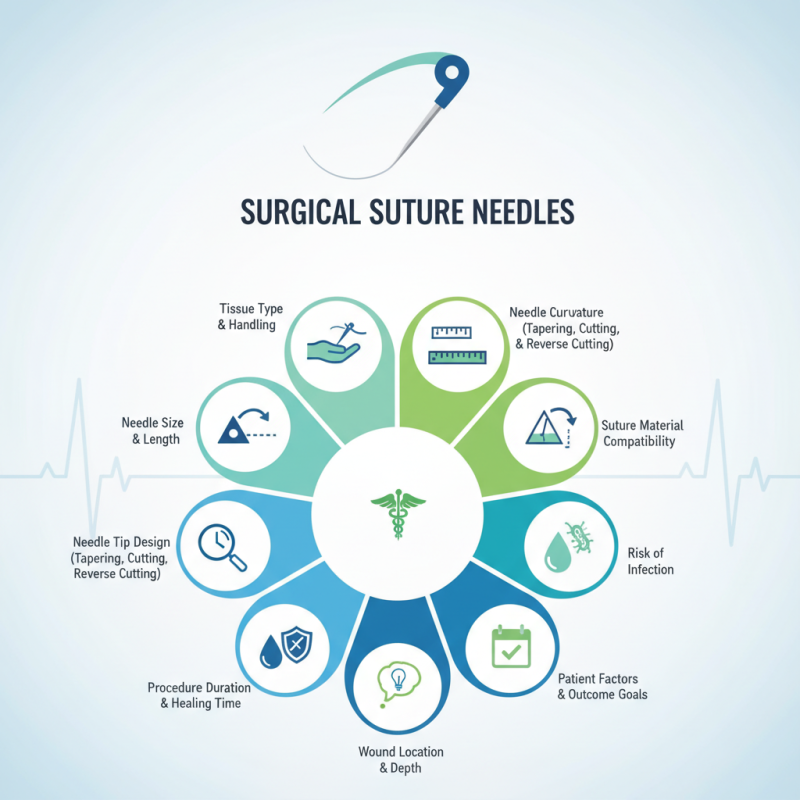
Surgical suture needles vary in design, size, and functionality. Each factor plays a vital role in the surgical process. For instance, a curved needle might be essential for tight tissue areas, while straight needles serve different purposes. Choosing the wrong type can hinder a surgeon's work and affect patient satisfaction.
It is essential to understand that no single needle suits all situations. Surgeons often face choices that require careful consideration. Potential complications, such as tissue trauma and infection, can arise from improper selection. Reflecting on past experiences can provide valuable insights, aiding in future decisions about surgical suture needles.
Understanding the Basic Types of Surgical Suture Needles
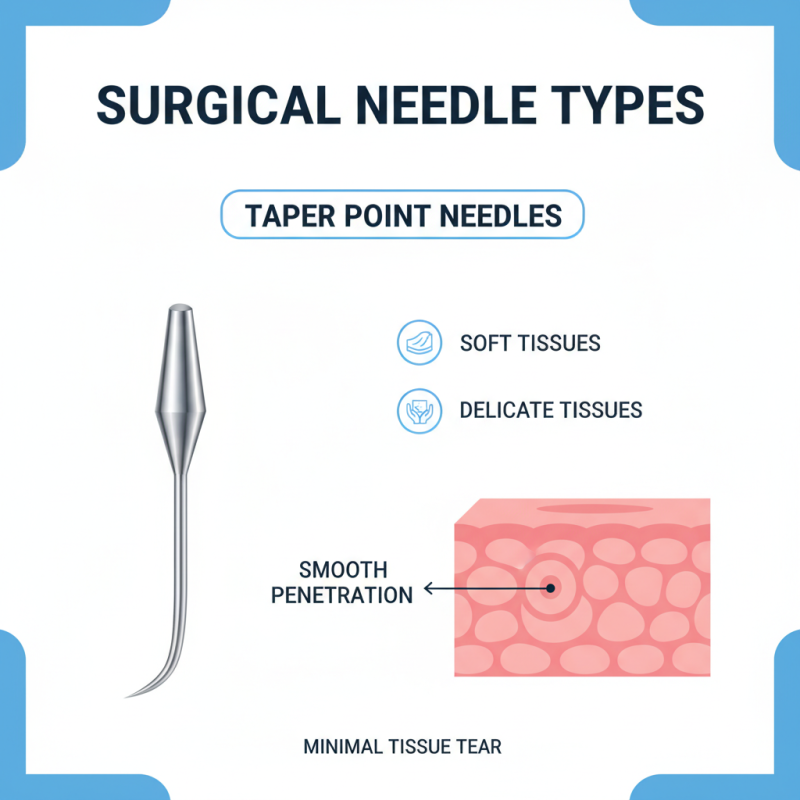
When choosing surgical suture needles, understanding their basic types is crucial. There are several categories. Each serves a specific purpose. Taper point needles are often used for soft tissues. Their sharp tip allows for smooth penetration without tearing. This design is excellent for delicate tissues.
Cutting needles are another common choice. They feature a sharp edge on their body. This design is beneficial for tough tissues. You might consider a reverse cutting needle for more control. It cuts as it passes through and minimizes potential tearing. However, using them requires caution. Misuse can lead to complications like excess damage to surrounding tissues.
Additionally, consider the size of the needle. Needles come in various gauges. Smaller gauges mean larger needles, and vice versa. Selecting the correct size may take practice. It’s easy to overlook, but it affects suturing efficiency. Experimentation can lead to insights over time. Remember, choosing the right needle isn’t just about preference; it’s about patient outcomes. Reflecting on previous choices can enhance future performances.
Evaluating Needle Size and Shape for Specific Procedures
Choosing the right surgical suture needles is crucial for effective procedures. The size and shape of needles can influence outcomes significantly. Surgeons should consider the procedure type before selecting a needle. For delicate tissues, a smaller needle with a tapered point may be ideal. This reduces trauma and promotes healing.
Conversely, heavier tissues may require a larger, more robust needle. The curvature of the needle also plays a key role. A straight needle may suit some suturing tasks, while a curved needle can navigate complex anatomical structures. It’s essential to match the needle design with the specific requirements of each procedure. Taking these factors into account can lead to better patient outcomes.
However, many practitioners overlook these details sometimes. They may stick to familiar needle types. Reflecting on previous surgeries can reveal missed opportunities for improvement. By evaluating needle choices more carefully, surgical teams can enhance their techniques and achieve optimal results. Understanding the impact of needle size and shape can make a substantial difference in patient care.
Assessing Materials and Coating Options for Optimal Performance
Choosing the right suture needle involves assessing various materials and coatings. Steel needles are standard, but newer options like titanium offer advantages. Titanium is lighter and less prone to corrosion. This can decrease the risk of infections, as highlighted in recent studies.
Different coatings also play a crucial role. Some needles come with a silicone coating that enhances glide. This feature reduces tissue trauma and makes suturing quicker. A report from a leading surgical journal states that proper coating can reduce drag by up to 50%. Yet, it's essential to remember that not all coatings are compatible with every tissue type. Testing is vital before making a final choice.
You might think that all suture needles are similar. However, their performance varies significantly. Variability in tissue response can lead to complications. A study revealed that 20% of soft tissue procedures show unexpected results, stressing the need for careful selection. Assessing all options can be overwhelming, yet it's necessary for optimal outcomes.
10 Essential Tips for Choosing Surgical Suture Needles for Optimal Results
| Dimension |
Material |
Coating Type |
Recommended Use |
| 3/8 Circle |
Stainless Steel |
Silicone |
General Soft Tissue |
| 1/2 Circle |
Carbon Steel |
Coated |
Orthopedic Procedures |
| Straight |
Titanium |
Non-Coated |
Eye Surgery |
| Curved |
Stainless Steel |
PTFE |
Cardiac Surgery |
| Taper Point |
High Carbon Steel |
Epoxy Coated |
General Surgery |
Considering the Importance of Needle Point Properties
Choosing the right surgical suture needle is critical. The properties of the needle point play a vital role in surgical outcomes. A sharp, precise point can minimize tissue trauma, leading to improved healing and less scarring. Different procedures require different needle points. Some are tapered, while others are cutting. Understanding the purpose behind each design is essential.
The taper point needle is ideal for delicate tissues. It pierces smoothly, causing minimal damage. In contrast, a cutting needle is designed for tougher tissues. It reduces the risk of slippage during suturing. However, using the wrong type can compromise the operation. Surgeons must evaluate each case carefully. Sometimes, even experienced hands can overlook these details. Reflecting on past procedures can offer insights. Did the needle perform as expected? Were there complications? Such questions guide future choices.
Reviewing Manufacturer Guidelines and Recommendations for Selection
Selecting the right surgical suture needle is critical for optimal patient outcomes. Manufacturer guidelines provide valuable insights that can significantly impact surgical success. According to a recent industry report, 70% of complications arise from improper needle selection. To mitigate these risks, it is essential to review recommendations closely.
Consider the type of tissue you are suturing. Some manufacturers specify needle types that work best for particular tissues, such as skin or muscle. For example, a tapered needle may be recommended for soft tissue, while a cutting needle might be better for tougher environments. Ignoring these specifications can lead to unnecessary trauma and healing delays.
Additionally, pay attention to needle size and curvature, as these can affect maneuverability. A recent survey indicated that 60% of surgeons have experienced difficulties during suturing due to inadequate needle selection. It is important to experiment and reflect on different options. Using the wrong needle can hinder your efficiency. Balancing the manufacturer's guidelines with personal experience is key to making informed choices.
Comparison of Surgical Suture Needle Types for Optimal Results