You have successfully logged out.

7 Tips for Choosing the Best Capsule Machine?
Choosing a Capsule Machine is less about chasing the most features and more about finding a good fit for your daily routine. A machine may look sleek on a counter, yet feel awkward if it cannot fit your favorite mug beneath the spout. Check capsule compatibility, drink options, cleaning steps, and the ongoing cost of capsules before comparing colors or special settings. Small details matter.
Coffee educator James Hoffmann has shared a useful principle: “The best coffee is the coffee you enjoy drinking.” Let that guide your choice. Think about whether you prefer espresso, a longer cup, or milk-based drinks. Check how quickly the machine heats, how much counter space it takes, and whether used capsules are easy to handle. A removable water tank can be easier to refill beside a sink. A drip tray that slides out simply can save a messy cleanup.
The seven tips ahead will help you compare those practical details without treating any single model as perfect. Some machines are quieter; others offer more drink choices. Capsule prices and availability can also vary by location, so check what you can actually buy nearby. A low purchase price may not tell the whole story. And yes, even a highly rated machine can disappoint if its coffee tastes wrong to you. That is worth remembering.
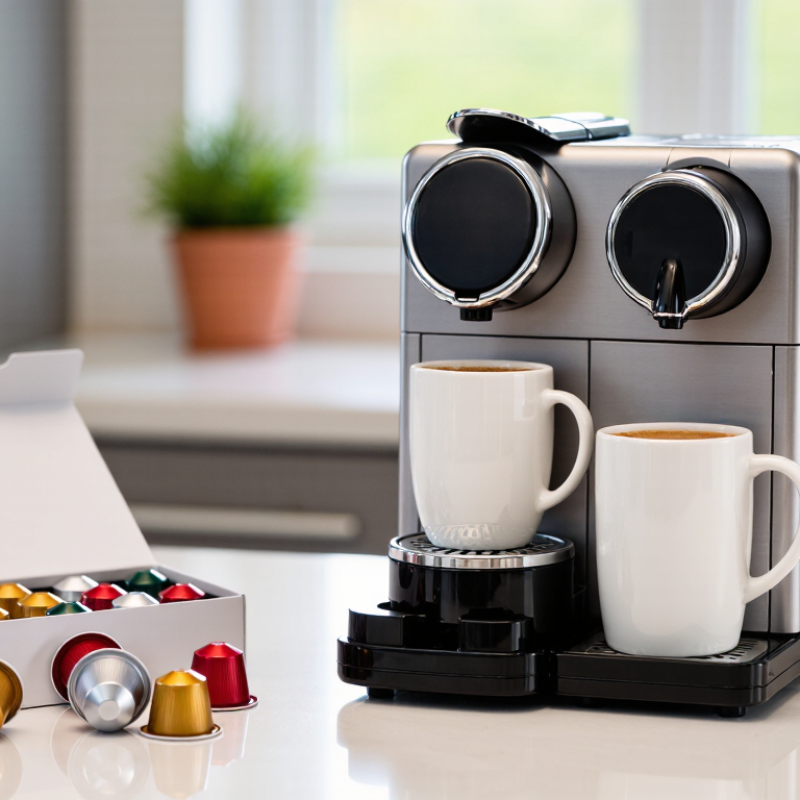
What a Capsule Machine Is and How It Works
A capsule machine brews coffee by sending heated water through a sealed, pre-portioned capsule. Inside, the capsule’s foil is pierced, and water passes through the coffee grounds before flowing into a cup. The machine controls key steps, including water temperature and brewing time. Convenient, yes. But the result still depends on capsule freshness, cup size, and how clean the machine is.
When comparing machines, look at the brewing process rather than relying only on advertised pump pressure. Check whether the water tank is easy to remove, whether the drip tray fits your usual mug, and how the used capsules are collected. A narrow tray can turn a quick morning coffee into a small spill. Also check the cleaning instructions: mineral buildup may affect water flow and flavor.
The International Coffee Organization’s Coffee Report and Outlook, published in June 2024, estimated global coffee consumption at 177 million 60-kilogram bags for 2023/24.
That scale helps explain the demand for convenient brewing, but it does not prove every capsule system suits every household.
Capsule format matters. Machines generally accept specific capsule shapes, so compatibility can limit your choices later. Read the manual before buying, and check whether the machine offers adjustable volume or temperature. Those settings help, though they cannot rescue stale coffee.
One detail is easy to overlook: some machines need a brief rinse before brewing, which can add water and time. I’d test the everyday routine, not just the first cup. A showroom demo rarely shows the cleanup.