You have successfully logged out.

The 2026 Medical Syringe market reflects a demanding balance between safety, scale, and supply reliability. Medical Syringe manufacturers now serve hospitals, vaccination programs, laboratories, and home-care providers across diverse regions. Their products must perform consistently under pressure. A cracked barrel or unclear graduation can disrupt treatment within seconds.
Market estimates show strong, but not identical, growth. Fortune Business Insights valued the global medical syringes market at approximately USD 15.84 billion in 2023. Its report projects continued expansion through 2032, supported by vaccination, chronic disease care, and injectable therapies. Grand View Research also forecasts steady growth, although its market boundaries and revenue estimates differ. The rankings are not perfectly clean. That limitation matters.
Procurement teams should therefore examine more than production volume. The World Health Organization highlights injection safety as a critical part of infection prevention and patient protection. WHO guidance also emphasizes appropriate equipment, trained personnel, and safe disposal practices. Reliable manufacturers should demonstrate compliance with standards such as ISO 7886-1 for sterile, single-use syringes. They should also provide traceable lot records, validated sterilization processes, and transparent quality documentation.
Small details matter. Smooth plunger movement reduces hand fatigue. Clear markings support accurate dosing. Secure packaging protects sterile products during long-distance transport. These features become especially important in hot, humid, or resource-limited environments.
This guide evaluates leading manufacturers through quality systems, product range, manufacturing capacity, certifications, innovation, and global fulfillment experience. It does not treat marketing claims as proof. Buyers should verify current certificates, local registrations, audit results, and product specifications before purchasing. Supplier performance can change. Careful review remains essential in 2026.
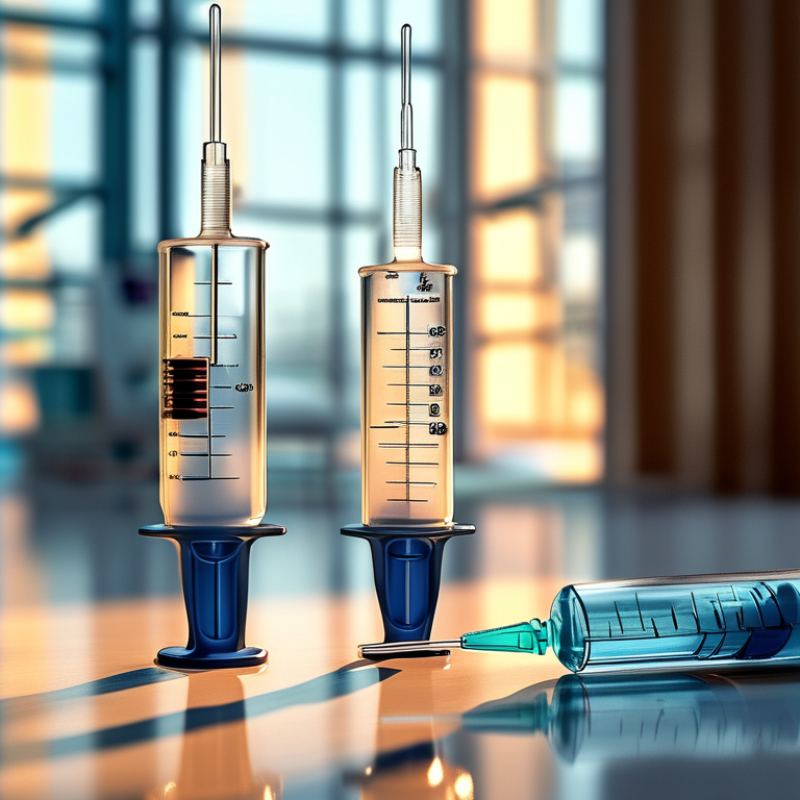
2026 Top Medical Syringe Manufacturers for Global Buyers
Medical Syringe Market Overview for Global Buyers in 2026
The medical syringe market remains essential across hospitals, clinics, laboratories, and vaccination programs. MarketsandMarkets estimates the market could grow from about USD 14.6 billion in 2023 to USD 19.5 billion by 2028. Its forecast indicates an annual growth rate near 6%. Forecasts vary by product scope and region. That difference matters.
Demand is rising for safety syringes, prefilled formats, and low-dead-space designs. The World Health Organization estimates that approximately 16 billion injections occur worldwide each year. This volume increases pressure on manufacturers to prove sterility, dimensional accuracy, packaging quality, and traceability. Global buyers should examine ISO 7886 testing, ISO 13485 quality systems, and documented biocompatibility evidence. Local regulatory registration still applies. One certificate is rarely enough.
Tips for buyers: Compare total landed cost, not only the unit price. Request recent batch records, sterilization validation, shelf-life data, and sample inspection reports. Check barrel clarity under normal clinical lighting. Test plunger movement by hand. Small friction differences can affect dosing confidence. A lower price may hide higher rejection rates or weaker packaging. I would not treat any market forecast as certainty. Supply disruptions, hospital budgets, and changing injection practices can quickly alter demand. A careful supplier review should include backup capacity, complaint response time, and written change-control procedures.
Common nominal syringe capacities used in healthcare range from 1 mL to 60 mL. Smaller syringes are generally selected for precise low-volume administration, while larger sizes are used for fluid transfer, irrigation, and specialized clinical procedures. Capacity, sterility, needle compatibility, safety features, and regulatory compliance are key purchasing considerations for global buyers in 2026.
When evaluating medical syringe manufacturers, buyers should examine quality systems before comparing prices. A valid ISO 13485 certificate supports process control, but it does not replace an on-site audit. Request recent audit records, calibration logs, and corrective-action reports. Documentation matters. Reliable manufacturers should provide lot traceability from resin selection to final packaging. Their records should identify production dates, operators, inspection results, and sterilization details. Check whether syringes meet relevant standards, such as ISO 7886, and confirm requirements for sterile products in your destination market. Evidence should be current, product-specific, and independently verifiable.
Product performance needs practical testing. Inspect barrel clarity, graduation accuracy, plunger movement, gasket fit, and needle connection strength. A syringe may look acceptable but still leak during injection. Ask for samples from normal production, not specially prepared units. Test them under realistic storage and handling conditions. Review sterility validation, biocompatibility data, packaging integrity, and shelf-life studies. Experience shows that small packaging defects can create major distribution problems. I would not rely on a perfect sample alone; supplier consistency matters more.
Tips: Ask for three consecutive lot samples. Compare measurements, not impressions. Confirm minimum order quantities, lead times, complaint response procedures, and change-notification policies. Visit the facility when possible, or use an independent auditor. A polished brochure is not evidence. Some evaluation methods remain imperfect, especially when public records are limited. Record every unanswered question before approval.
Leading medical syringe manufacturers distinguish themselves through controlled production, consistent documentation, and practical product design. Experienced facilities often use automated molding, cleanroom assembly, and in-process visual inspection. These controls help reduce barrel defects, unclear graduations, and plunger resistance. Product ranges may include 1 mL, 3 mL, 5 mL, and 10 mL syringes, with luer slip or luer lock connections. Some manufacturers also produce insulin, tuberculin, safety, oral, and prefilled syringe formats. Each design serves a different clinical workflow.
Reliable suppliers support their claims with batch records, material traceability, and quality-system certification such as ISO 13485. They should provide sterilization validation, biocompatibility data, packaging tests, and clear shelf-life information. Strong manufacturers can adjust graduation accuracy, gasket materials, needle options, and private packaging for different markets. Customization takes time. That detail is easy to underestimate. Buyers should compare leakage testing, dead-space volume, tip compatibility, and carton durability before placing large orders. A syringe may look identical in a catalog yet feel different during injection. Procurement teams should request samples and evaluate them with clinical or technical staff. Regulatory expectations also vary by destination, so certificates must match the intended market. No manufacturer excels in every category; production scale, customization speed, and minimum order quantities often involve trade-offs.
For 2026 medical syringe procurement, compliance must begin with measurable quality controls. The World Health Organization estimates that about 16 billion injections occur globally each year. Its 2022 infection prevention report also found healthcare-associated infections in 7% of acute-care patients in high-income settings and 15% in lower-income settings. These figures make sterility, leakage prevention, and traceability practical buying requirements, not paperwork exercises.
Qualified manufacturers should demonstrate ISO 13485:2016 certification, risk management under ISO 14971:2019, and biological evaluation aligned with ISO 10993-1:2018. Syringe designs should meet relevant ISO 7886 requirements, while sterile products need validated sterilization cycles and packaging integrity tests. Buyers should review lot-release records, dimensional tolerances, bioburden results, calibration logs, and corrective-action history. In the United States, the FDA Quality Management System Regulation becomes effective on February 2, 2026, incorporating ISO 13485:2016. European buyers should also check applicable Medical Device Regulation obligations. A certificate helps. It does not replace an audit.
Tips: Request recent third-party audit findings, not only certificates. Confirm whether testing covers the exact syringe size, material, and sterilization method. Check complaint trends and recall history. Ask for evidence of supplier controls for needles, barrels, plungers, and packaging. No checklist catches everything. A weak audit can still hide production variation, so buyers should reassess suppliers after process changes or repeated complaints.
| Buyer Market | Regulatory Framework | Core Syringe and Needle Standards | Quality-System Expectations | Sterilization and Biocompatibility | Documents to Request from a Manufacturer |
|---|---|---|---|---|---|
| United States | U.S. Food and Drug Administration requirements apply to medical devices. Piston syringes are regulated under 21 CFR 880.5860. The FDA Quality Management System Regulation is aligned with ISO 13485:2016 and became effective on February 2, 2026. | ISO 7886-1 Sterile, single-use syringes for manual use. ISO 7864 Sterile hypodermic needles for single use, when supplied with the syringe. | Documented design controls, risk management, process validation, complaint handling, corrective and preventive action, and traceability. | Validate the claimed sterilization process, commonly ethylene oxide or radiation. Biological evaluation should be performed according to ISO 10993-1. | FDA establishment and product information where applicable; ISO 13485 certificate; device master and technical documentation; sterilization validation; biocompatibility reports; lot-release and shelf-life data. |
| European Union and EEA | Medical devices are governed by Regulation (EU) 2017/745 on medical devices. CE marking requires conformity assessment appropriate to the device and its intended use. | ISO 7886-1 Manual single-use syringes. ISO 7864 Hypodermic needles for single use. EN ISO 11608 Relevant when the product is a needle-based injection system. | An ISO 13485-based quality management system, technical documentation, post-market surveillance, vigilance procedures, and risk management under ISO 14971. | Sterile products require validated sterilization and sterile-barrier packaging. Applicable process standards may include ISO 11135 for ethylene oxide and ISO 11137 for radiation. | EU Declaration of Conformity; CE information; notified-body certificate when required; technical documentation index; ISO 13485 certificate; PMS plan; sterilization and packaging validation. |
| United Kingdom | Medical devices are regulated under the UK Medical Devices Regulations 2002, as amended. Great Britain and Northern Ireland have different market-access arrangements. | ISO 7886-1 Single-use manual syringes. ISO 7864 Single-use hypodermic needles. | A controlled quality system with design, manufacturing, supplier-control, complaint, vigilance, and post-market processes appropriate to the applicable UK route. | Sterilization, packaging, and transport validation should demonstrate maintenance of sterility through the stated shelf life. | UK Declaration of Conformity; applicable UKCA or CE documentation; approved-body or notified-body evidence where relevant; ISO 13485 certificate; technical file; post-market surveillance records. |
| Canada | Health Canada regulates medical devices under the Medical Devices Regulations, SOR/98-282. Importers and distributors should verify the manufacturer's licensing and the device's Canadian market authorization where required. | ISO 7886-1 Manual single-use syringe requirements. ISO 7864 Single-use hypodermic needle requirements. | Manufacturers should maintain a quality system that supports Canadian regulatory requirements, complaint investigation, recall readiness, device history, and supplier qualification. | Use validated sterilization and packaging processes. Biological safety assessment should consider material, contact type, duration, and intended clinical use. | Canadian licensing information where applicable; ISO 13485 certificate; device specifications; sterilization validation; biocompatibility summary; certificate of analysis; lot traceability records. |
| Australia and New Zealand | Australia requires inclusion in the Australian Register of Therapeutic Goods when applicable and regulates devices under the Therapeutic Goods Act and related medical-device rules. New Zealand requirements are administered through Medsafe. | ISO 7886-1 Sterile, single-use manual syringes. ISO 7864 Sterile hypodermic needles. | The manufacturer should operate an auditable quality system and provide conformity evidence suitable for the Australian and New Zealand supply route. | Validate sterilization dose or cycle, residuals where relevant, packaging integrity, and maintenance of sterility during distribution. | Australian conformity documents; inclusion or sponsor information where applicable; ISO 13485 certificate; essential-principles evidence; sterilization and packaging validation; product labels and instructions for use. |
| Japan | Medical devices are regulated under Japan's Pharmaceuticals and Medical Devices Act. Market access may involve the Ministry of Health, Labour and Welfare, the Pharmaceuticals and Medical Devices Agency, and registered certification or approval bodies, depending on the device. | ISO 7886-1 Manual single-use syringe performance requirements. ISO 7864 Single-use hypodermic needle requirements. | The manufacturer and relevant marketing authorization structure should support Japanese QMS requirements, manufacturing controls, change control, and adverse-event reporting. | Provide validated sterilization, aseptic or sterile-barrier controls, packaging integrity testing, and material safety information. | Japanese market authorization or certification evidence where applicable; QMS conformity documentation; ISO 13485 certificate; Japanese labeling support; sterilization validation; technical specifications. |
| Global Baseline for Export Projects | A manufacturer serving multiple regions should map each product configuration to the destination market's device classification, registration, labeling, import, and post-market requirements. | ISO 7886-1 Manual single-use syringes. ISO 7864 Hypodermic needles. ISO 8537 Insulin syringes, where applicable. | Prefer an ISO 13485:2016-certified system with documented risk management, ISO 14971, validated processes, incoming inspection, in-process controls, final release, and full lot traceability. | Require process validation to the applicable method, sterile-barrier validation under ISO 11607, and transport simulation appropriate to the distribution route. | Current certificates; product drawings and specifications; declarations of conformity; risk-management file summary; biocompatibility evaluation; sterilization and packaging validation; certificate of analysis; sample labels; change-notification procedure. |
| Procurement Verification Dimension | Regulatory compliance should be checked for the exact model, configuration, intended use, packaging quantity, sterility claim, and destination country rather than for a factory or product family alone. | Confirm barrel graduation accuracy, plunger movement, dead space, leakage, force, cap or needle fit, protective-cap security, and compatibility with the intended medication or solution. | Check certificate scope, certificate validity, issuing body, manufacturing-site address, audit status, nonconformance history, and whether outsourced processes are included in the quality system. | Confirm sterilization method, residual limits, sterility-assurance level, packaging seal strength, integrity after aging, and shelf-life justification. | Request recent batch records, inspection plans, sample test reports, product-change history, complaint and recall procedure, environmental controls, material declarations, and shipping-condition validation. |
Global syringe sourcing is becoming more data-driven. Grand View Research estimated the global syringes market at about USD 16 billion in 2023, with continued growth expected through 2030. This demand increases pressure on capacity, resin costs, labor, and sterile packaging. Buyers should compare quotations by specification, not unit price alone. A low-cost syringe may require higher inspection costs or create delivery delays.
Supplier selection needs practical evidence. Review ISO 13485 certification, sterilization validation, batch traceability, and recent audit findings. The World Health Organization reports that unsafe injections can transmit infections, making quality controls commercially essential. Ask for samples from the same production line used for bulk orders. Check plunger movement, barrel clarity, graduation accuracy, seal integrity, and carton protection. Small differences matter.
Tips: Request a three-year pricing history. Separate resin, packaging, freight, and tooling charges. Confirm minimum order quantities and lead times in writing. Use a pilot shipment before signing a long-term contract. It is tempting to trust certificates too quickly. I have found that factory records often reveal more than polished presentations. Also inspect whether the supplier can support demand changes without replacing materials or processes. Forecasting is imperfect, especially during public-health surges. Leave room for safety stock, but avoid excessive inventory that may age before use.