You have successfully logged out.

How to Use TRIzol Reagent for RNA Extraction
RNA extraction can look deceptively simple: lyse the sample, separate its phases, and recover the RNA. In practice, the quality of the result depends on small choices, from rapid sample disruption to careful pipetting near the interface. Trizol combines phenol and guanidinium salts to disrupt cells and help protect RNA from degradation. The steps are clear. The technique takes practice.
Thermo Fisher Scientific’s TRIzol Reagent protocol gives practical starting ratios: 1 mL of reagent for 50–100 mg of tissue, or roughly 5–10 million cultured cells. These are protocol recommendations, not guarantees; sample type and handling can change yield and purity. In their foundational 1987 Analytical Biochemistry paper, RNA-isolation researchers Piotr Chomczynski and Nicoletta Sacchi wrote, “A new single-step method for RNA isolation by acid guanidinium thiocyanate-phenol-chloroform extraction is described.” Their work established the method behind this widely used reagent. Small details matter.
This guide explains how to use Trizol from sample preparation through RNA precipitation and washing. It also covers the visible cues that can prevent common mistakes, such as disturbing the interphase during transfer. A clean phase boundary is helpful, but it is not proof of RNA quality. Even experienced researchers can lose material or carry contaminants into the aqueous phase. That is worth remembering. Careful technique, appropriate controls, and downstream quality checks make the workflow more dependable.
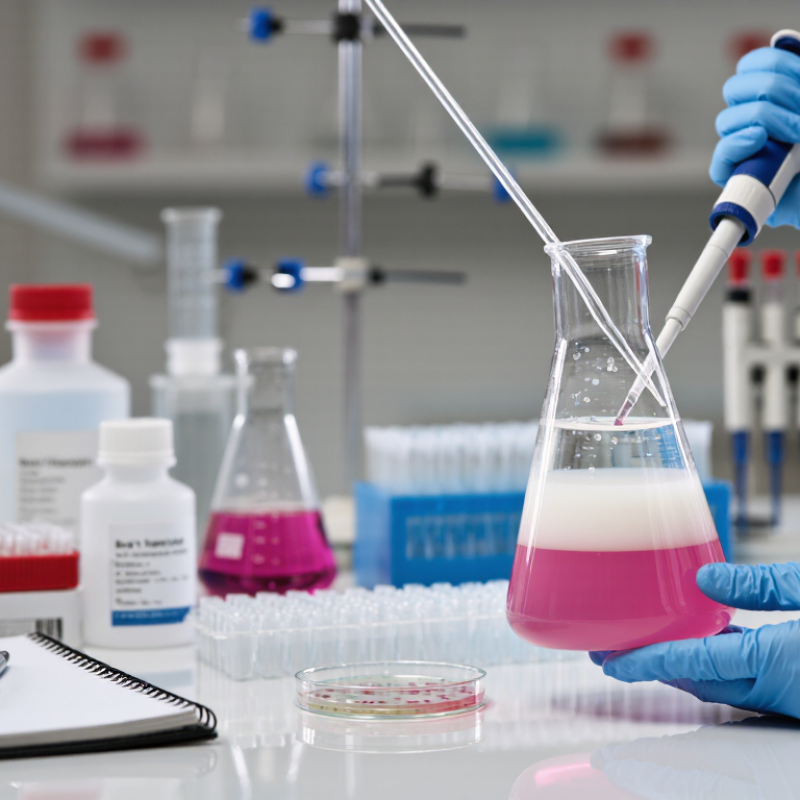
TRIzol Reagent: Composition and RNA Extraction Principle
An acid guanidinium-phenol reagent combines phenol, a chaotropic salt, and an acidic buffer. Each component has a role. Guanidinium thiocyanate disrupts cells and denatures proteins, including RNases that can quickly damage RNA. Phenol helps separate cellular molecules, while the acidic conditions favor RNA entering the aqueous phase after chloroform is added and the mixture is centrifuged.
The cloudy sample forms distinct layers. RNA is mainly in the upper aqueous layer; DNA and proteins are concentrated elsewhere, though separation is not perfect. Carefully transfer the upper layer without touching the interphase. Then precipitate the RNA with alcohol, wash the pellet, and dissolve it in RNase-free water. A small, invisible pellet is easy to lose. I would not assume a clear-looking extract is pure; absorbance checks or downstream controls can reveal carryover.
Tips: Work in a fume hood and wear suitable protective equipment, since phenol and chloroform are hazardous. Use clean, RNase-free tubes and pipette tips. Keep the phase boundary steady when collecting the aqueous layer. If the interface gets disturbed, pause and reassess rather than forcing the transfer.