You have successfully logged out.

What Is a P Tau 217 Assay?

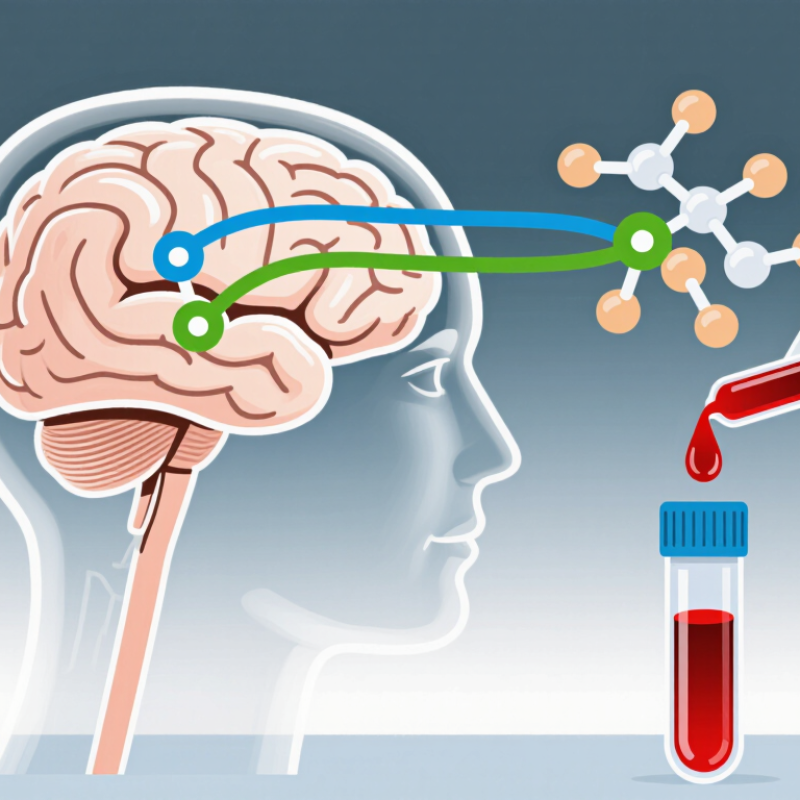
A P Tau 217 Assay measures phosphorylated tau 217, a protein change associated with Alzheimer’s disease, in a blood sample. The test may help clinicians assess whether Alzheimer’s-related brain changes are present. It is not a stand-alone diagnosis. A result needs context.

The process is tangible: a small blood draw, laboratory analysis, and a report showing the measured biomarker level. Different assays and laboratories may use different methods, so results are not always interchangeable. Dr. Oskar Hansson, a leading Alzheimer’s biomarker researcher, has studied blood-based p-tau217 extensively. A fair paraphrase of his research is that blood biomarkers can make Alzheimer’s assessment more accessible, while still requiring clinical interpretation. That distinction matters.

A P Tau 217 Assay can inform decisions about further evaluation, but it cannot explain every memory change or replace a clinician’s judgment. Age, symptoms, other health conditions, and the test method all matter. The picture is useful, not complete. Even an apparently clear result can leave questions. Patients should discuss what a result means for their own care with a qualified healthcare professional.
What Is a P Tau 217 Assay?

What the P Tau 217 Assay Measures

What Is a P Tau 217 Assay?

What the P Tau 217 Assay Measures

A p-tau217 assay measures phosphorylated tau protein at a specific site, threonine 217. The sample is usually blood, though some tests use cerebrospinal fluid. In Alzheimer’s disease, changes linked to amyloid can raise p-tau217 in blood. The assay detects that signal; it does not count brain tangles or measure memory directly. That distinction matters.

Research reports show why clinicians are interested.

A 2020 JAMA study found plasma p-tau217 distinguished Alzheimer’s dementia from other neurodegenerative diseases with an area under the curve of 0.96 in its study cohort. This is a measure of how well a test separates groups, not a guarantee for an individual.

In a 2024 JAMA study of 1,213 patients, a blood-test combination including p-tau217 achieved about 90% diagnostic accuracy. That result applies to the specific test and study setting, not every assay.

In practice, clinicians interpret a result alongside symptoms, medical history, and sometimes brain imaging or spinal-fluid testing. Age, other illnesses, sample handling, and the laboratory method can affect interpretation. A high value is informative, but it is not a diagnosis by itself. Cutoffs can differ between assays, and the science is still being refined.

The number on the report needs context.

How P Tau 217 Relates to Alzheimer’s Disease

P-tau217 is a blood biomarker linked to changes in tau, a protein in the brain. In Alzheimer’s disease, abnormal tau accumulates alongside amyloid plaques. Higher blood p-tau217 levels are often associated with Alzheimer’s-related brain changes, including before clear memory problems appear. That signal matters. A simple blood draw may help clinicians decide whether further assessment is needed, such as a PET scan or spinal-fluid test. But a result alone cannot establish why someone has memory difficulties or predict exactly what will happen.

Evidence is promising, though context matters. A 2024 JAMA study of 1,213 patients found that blood biomarker tests including p-tau217 classified Alzheimer’s pathology with roughly 90% accuracy. Clinical assessment alone was less accurate in that study. The Alzheimer’s Association’s 2025 clinical practice guideline sets performance thresholds for using blood tests: at least 90% sensitivity and 75% specificity for triage, and at least 90% for both when replacing PET or spinal-fluid testing in specialized care. These are benchmarks, not guarantees for every patient. Age, other health conditions, and the specific assay can affect interpretation. Not a diagnosis. A clinician must weigh the result against symptoms, history, and other findings.

How a P Tau 217 Test Is Performed

For a blood-based p-tau217 test, the process usually begins with a clinician reviewing your symptoms, medical history, and reason for testing. You may be asked about medicines or recent health changes. Follow the instructions provided; preparation requirements can vary. A standard blood draw follows. A phlebotomist collects blood from a vein in your arm, usually into a small tube. The sample is labeled and sent to a laboratory. There, an assay measures phosphorylated tau at a specific site called 217. The exact method and reporting range depend on the validated test used. No special procedure is usually needed.

Results are interpreted alongside your age, symptoms, and other clinical information. A p-tau217 result can help assess the likelihood of Alzheimer’s-related brain changes, but it does not confirm a diagnosis by itself. Depending on the result and clinical picture, a healthcare professional may discuss further evaluation, such as cognitive testing or additional biomarkers. Cutoffs can differ between assays, so numbers should not be compared casually. It is tempting to treat one result as a complete answer. That is too simple; the test is one piece of a wider assessment.

What Is a P Tau 217 Assay? - How a P Tau 217 Test Is Performed

Dimension Description Practical Details
What the assay measures Phosphorylated tau at threonine 217, commonly written as p-tau217. Tau is a protein found mainly in nerve cells. The measured signal reflects the amount of this specific tau form in the tested sample. It is not a direct image or count of brain plaques.
Why it is measured In Alzheimer’s disease, changes in p-tau217 in blood or cerebrospinal fluid are associated with Alzheimer-related brain changes, including amyloid pathology. The result can contribute to an evaluation of cognitive symptoms. It does not, by itself, establish a diagnosis or explain every cause of memory problems.
Common sample types Blood plasma is used in blood-based testing; some tests use cerebrospinal fluid (CSF). Collection and handling requirements depend on the specific validated assay. A CSF sample is collected by lumbar puncture; a blood sample is collected from a vein.
1. Sample preparation The laboratory receives and identifies the sample, then prepares it according to the assay procedure. Depending on the method, preparation may include separating plasma from blood cells or other sample-processing steps.
2. Target recognition In many methods, antibodies bind to p-tau217 or to regions of the protein that allow the phosphorylated target to be distinguished. Assay design matters: different methods may use different antibodies, reagents, and analytical procedures.
3. Signal measurement An instrument measures a signal produced by the assay, such as a light-based or other analytical signal. The signal is compared with calibrators or controls to estimate the amount of p-tau217 in the sample.
4. Quality checks Laboratory controls are used to assess whether the run and measurements meet the method’s acceptance criteria. If quality requirements are not met, the laboratory may need to repeat or investigate the analysis.
How results are reported Results may be reported as a concentration or as a category based on method-specific decision limits. Units, reference information, and cutoffs are not necessarily interchangeable between different assays or laboratories.
How to interpret a result A clinician interprets the finding alongside symptoms, medical history, examination, and other test results. Depending on the clinical question, follow-up may include additional biomarker testing or imaging. A result should not be interpreted in isolation.
Important limitations Accuracy and intended use depend on the particular assay, sample type, and population in which it has been evaluated. Results can be affected by pre-analytical factors and individual clinical circumstances. Testing and interpretation should follow the laboratory’s instructions and applicable clinical guidance.

Note: Test procedures, reporting formats, and clinical decision limits vary by assay. A p-tau217 result is one part of a clinical assessment, not a stand-alone diagnosis.

How P Tau 217 Results Are Interpreted

A P-tau 217 assay measures phosphorylated tau 217, a protein-related marker in blood or, less often, other samples. Blood testing is convenient, but the result is not a diagnosis by itself. It can help estimate the likelihood of Alzheimer’s-related changes in the brain.

Interpretation depends on the specific assay and its validated cutoffs. A result may fall into a lower, higher, or sometimes intermediate range. These categories describe probability, not certainty. Numbers need context. A clinician considers the person’s memory changes, medical history, age, and other test findings. Kidney function and other health factors may also affect some blood biomarker measurements.

A high result can support further evaluation, while a low result may make Alzheimer’s pathology less likely. Neither result explains every cause of confusion or memory loss. Not a verdict. When results are close to a cutoff, repeating the test or using another assessment may be considered. The next step should fit the individual, not just the laboratory value. Even a well-designed test leaves room for uncertainty, and that deserves an honest conversation.

Clinical Uses and Limitations of the Assay

What Is a P Tau 217 Assay?
Clinical Uses and Limitations of the Assay

A P-tau217 assay measures a form of tau protein carrying a phosphate group at position 217. In blood, elevated levels can signal changes associated with Alzheimer’s disease, especially when amyloid pathology is also present. Clinicians may use the result to help assess adults with memory or thinking problems. It can inform decisions about further evaluation, including specialist review or confirmatory testing. It is one piece of evidence, not a diagnosis.

Its value depends on the person and the test used. A result may be less informative when symptoms are absent or another condition could explain them. Age, other health factors, and differences between assay methods can affect interpretation. A low result does not rule out every cause of cognitive decline, and a high result cannot predict exactly how quickly symptoms will change. That boundary is easy to blur. Results should be considered alongside a clinical history, cognitive assessment, and other findings. Availability and recommended use may vary by setting.

Tips: Ask what the result can—and cannot—tell you. Bring a medication list and note when symptoms began. If the result seems inconsistent with daily experience, ask whether repeat or confirmatory testing is appropriate. A number alone is not the whole picture.

Article Source: